

Information and Registration
Grey Peters, a first-year student at the University of Virginia, is going to be offering 5 free classes for high school students through PLATO.
These will be on Tuesdays from 7:30-8:30pm ET, starting March 10 and ending April 7.
Class Schedule:
- Tuesday, March 10: Compassion: Innate or Societal?
- Tuesday, March 17: Dueling Morality
- Tuesday, March 24: The Nature of Evil
- Tuesday, March 31: Bounded By Biology: How Free Are We?
- Tuesday, April 7: Why Study Philosophy?
Instructor:
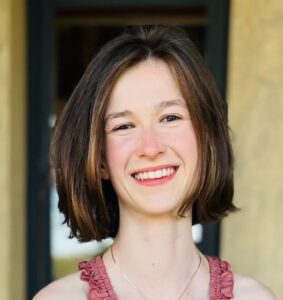
Grey Peters is a first-year college student at the University of Virginia, pursuing a Philosophy and Neuroscience double-major. As a graduate of Stanford Online High School, Grey was introduced to philosophy from middle school onwards and experienced first-hand the benefits of precollegiate philosophy. Grey has recently pursued further education through Yale University’s Interdisciplinary Center for Bioethics, applying philosophy and ethics to real-world applications. She is particularly interested in cognitive philosophy, neuroethics, and theories of self.
Class Descriptions
Tuesday, March 10, 7:30-8:30pm ET
Compassion: Innate or Societal?
Through the lens of Hobbes’s and Rousseau’s state of nature philosophy, we’ll evaluate the arguments for how compassion originates. Is compassion an innate part of human nature (as Rousseau suggests) or is it brought on by society (as Hobbes suggests)? Are there “option C” arguments that neither of the main positions account for? We’ll also discuss what it means to be compassionate, and why compassion is beneficial. Students can consider their own conception of compassion in comparison to those put forward by Hobbes and Rousseau, and we’ll discuss whether the students’ individual views change their opinion on the nature of compassion. As for all sessions, respectful disagreement and willingness to be persuaded otherwise are encouraged!
Tuesday, March 17, 7:30-8:30pm ET
Dueling Morality
Morality may seem like a straightforward “right/wrong” decision, but in reality, there are many potential frameworks for determining what is morally “right,” and not all of them agree. In this session, we’ll explore the famous trolley problem, conceived of by Philippa Foot and Judith Jarvis Thomson, and use it to reflect on our conceptions of what is morally right or wrong. We’ll consider how students approach the trolley problem, and, far more importantly, why. An alternative form of the trolley problem will also be presented, and students will consider whether the alternative form changes their thinking. Most importantly, this session encourages challenging one’s own views in the face of new evidence.
Tuesday, March 24, 7:30-8:30pm ET
The Nature of Evil
What creates evil? Environment? Genes? A combination? The existence of “evil” people has shaped our society in countless ways. This session explores how the existence of society may have shaped evil. Built around Zimbardo’s argument that environment is the dominant factor in determining “good” vs. “evil,” we’ll discuss whether or not this is a reasonable argument and why. Zimbardo puts forward an opinion on an extreme end of the spectrum (VERY far on the “nurture” end); there are many arguments to be made closer to the middle of the spectrum (evil = nature + nurture, in various amounts), and students will be encouraged to find the position that makes the most sense to them and articulate why they favor that position.
Tuesday, March 31, 7:30-8:30pm ET
Bounded By Biology: How Free Are We?
Much of our society relies on the assumption that we have “free will”: control over our actions. As such, when a biological factor, like a brain tumor, is judged to infringe on a person’s ability to act freely, it impacts whether they are held accountable for the actions. But how far does this—should this—really go? Everyone is constantly impacted by biological factors beyond their control. Can you really be “coerced” by your own biology? It’s tremendously difficult to separate free decisions from decisions impacted by an element of biology. In this seminar, we’ll discuss if that separation is even possible, or practical, diving into questions about biological free will.
Tuesday, April 7, 7:30-8:30pm ET
Why Study Philosophy?
Philosophy has long been criticized for being purely theoretical, not applicable to the real world, or just a general waste of time. We’re exploring those criticisms. Based around David Foster Wallace’s phenomenal “This Is Water” commencement speech, we’ll discuss how philosophy can, in fact, enhance society and thought. We’ll also discuss the arguments against studying philosophy, considering why some of these arguments might arise. This session will allow students to draw from their own experience discussing philosophy in prior sessions.


Connect With Us!