

Death is Stupid
Jana Mohr Lone is PLATO’s Executive Director.
Many children wonder about death, and many adults find it difficult to respond to their questions and fears. In the United States, we don’t discuss death very much. The subject tends to be uncomfortable and anxiety-producing for people, and the experience of losing a loved one is often treated as a private event. When children raise questions or express feelings about death, frequently the responses of the adults in their lives are unsatisfying.
The subject of death is not commonly raised in ordinary conversation; we generally shy away from it. We don’t seem to have the language to address what is, after all, the defining characteristic of our lives: our mortality, that fact that our lives have what philosopher Samuel Scheffler calls “temporal scarcity.” One day they will end. Children are newly in touch with this fact, and as a result the subject of death is of great interest to many and preoccupies not a few.
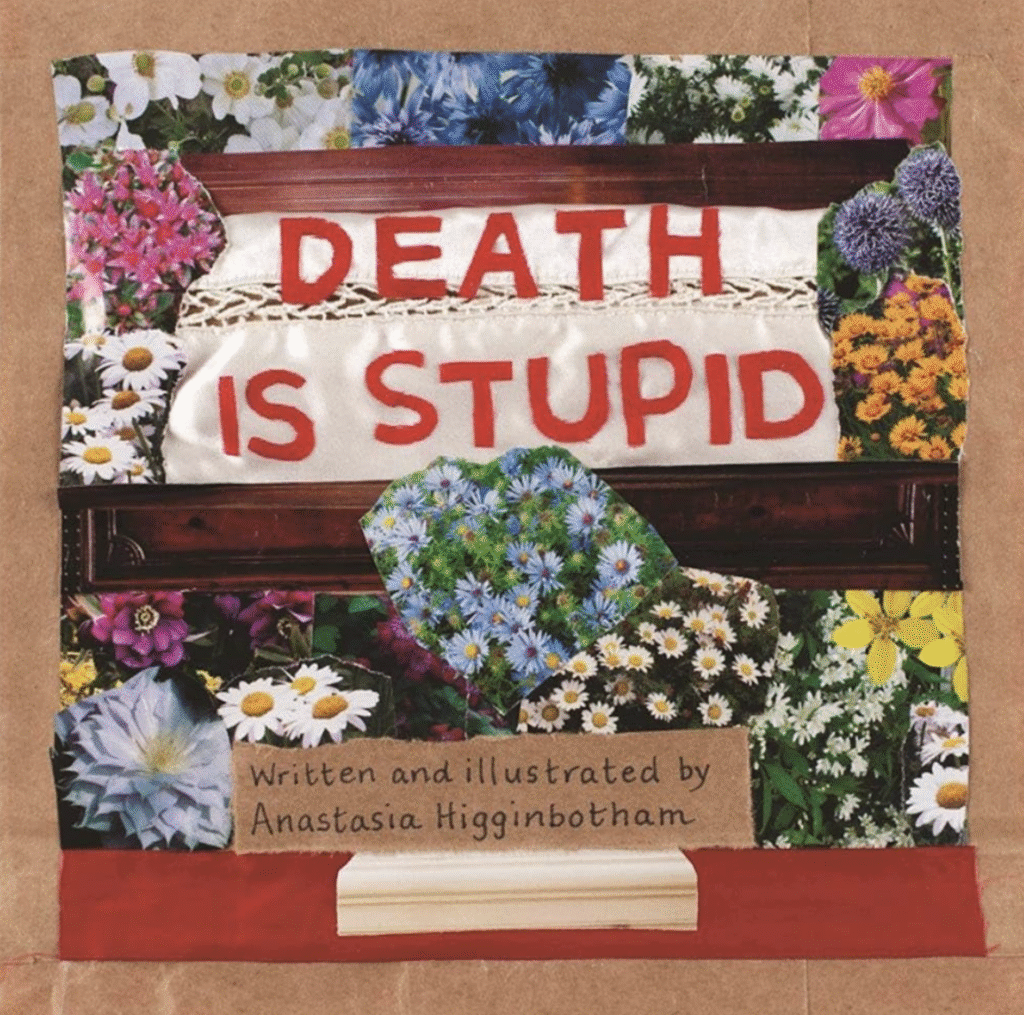
Death Is Stupid, a picture book written and illustrated by Anastasia Higginbotham, addresses with humor and sensitivity the feelings and thoughts children can have about death. The book is a helpful resource for inspiring conversations, in classrooms or at home, about death’s meaning and role in our lives.
The book begins with examples of what the book characterizes as the “stupid things” people can say when we lose a loved one.
“I know exactly how you feel.”
“Don’t cry.”
“Just be grateful for the time you had with her.”
“She’s in a better place.”
The child in the book, who has lost his grandmother, asks, “Would I be in a better place if I died?”
The book points out that we all have our own ways of understanding and dealing with death. But, the book cautions, “beware of the lies”; for example, “She’s only sleeping.”
“My gramma isn’t asleep,” the child declares. “She died.”
“It takes courage to go on living when the one you love has died, and to accept that death cannot be changed.” the author writes. But we don’t have to like it.
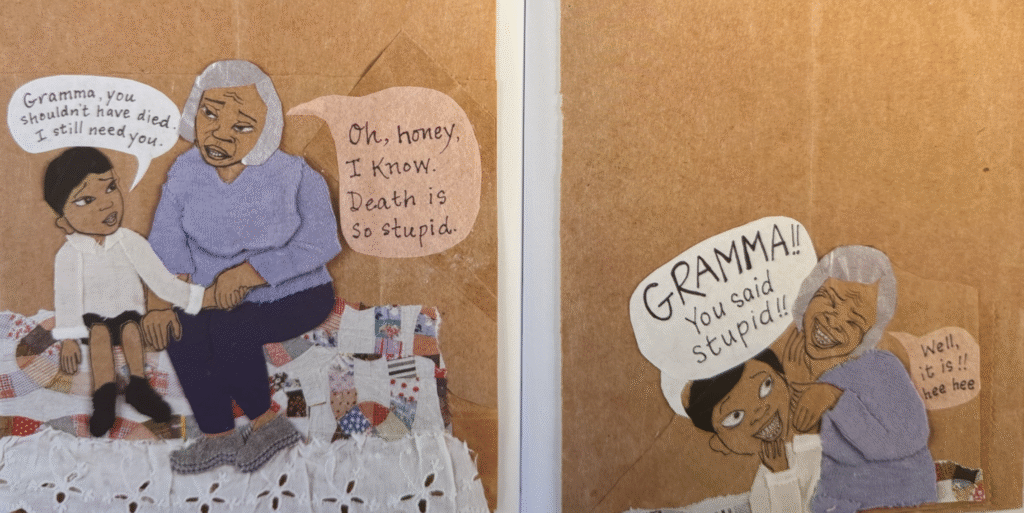
The book’s openness to the multitude of feelings and thoughts that death provokes helps foster a supportive environment for children to ask the questions that are on their minds. Questions my elementary school philosophy students have asked over the years include:
- Can we stay connected to people who are no longer alive?
- What happens when we die?
- Why do we have to die?
- Can you love someone who no longer exists?
- Does death make life mean more?
- Why are we afraid of death?
- Is it okay to be angry at death?
- How can we understand death?
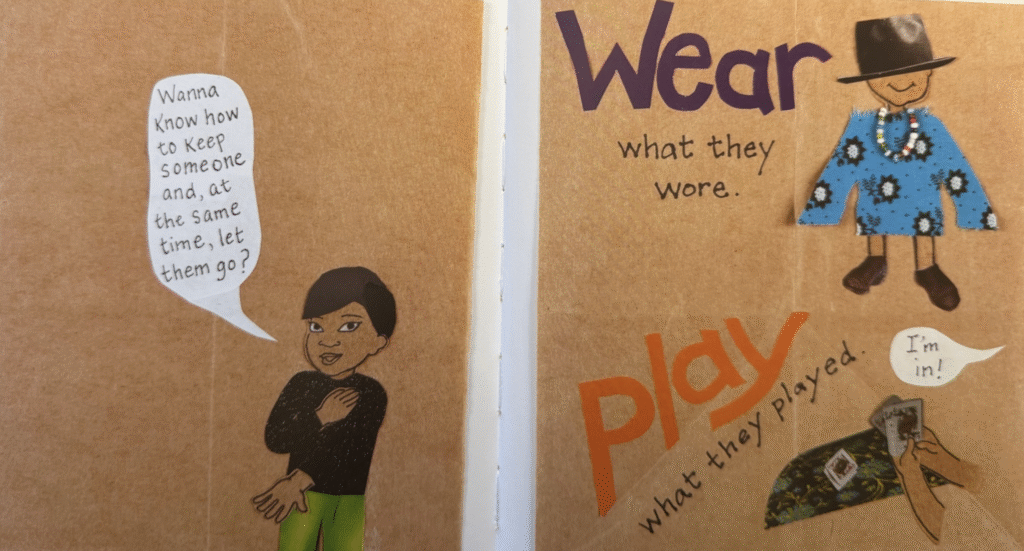
Children appreciate opportunities to talk about death, to think about what it means to live a mortal life, and to share ideas and questions with one another. Many times, children have approached me after a classroom discussion on this subject and told me that they hadn’t known that anyone else wondered about death the way they did.
After the publication of my book Seen and Not Heard, an adult reader wrote the following to me: “Starting around the age of 8 (possibly earlier) until my mid teen years, I had ongoing, intense panic attacks about the thought of death, yet I couldn’t stop myself from meditating on it. I never revealed this to anyone growing up and never imagined that anyone else would relate. . . . Thank you for providing children with a platform to express these lingering, often burdensome thoughts that I am sure they otherwise would have kept to themselves, as I had, and allowing them to relate to their peers through this as well.”
Some adults worry that conversations with children about death might be upsetting for them or generate frightening feelings of uncertainty and anxiety. But many, if not most, children are already thinking about death, whether or not we choose to address the topic with them. And it can be isolating for children to worry and wonder without having anyone with whom to talk.
Like adults, children approach the subject of death with fear and anxiety, wonder and curiosity, and a sense of mystery and awe. Picture books like Death Is Stupid offer ways to introduce the topic. When I use a picture book like this in a classroom, I always make sure to check in with the classroom teacher first, to learn if there have been any recent deaths in any of the students’ lives or other events that might make the topic particularly delicate and perhaps better put off for a later time.
As in all philosophy sessions with children, I work to ensure that the questions and ideas explored are those voiced by the children, that it is their interests that determine the discussion’s course. Especially when dealing with sensitive subjects such as death, it’s crucial that the conversation focuses on what matters to the children and that particular questions or topics are not being imposed on them.
Death is one of those subjects where philosophy can really help: there are no settled answers here, and many children welcome being able to discuss, for example, whether life without death would be preferable to a mortal life, or the role death plays in our relationships and the way we understand our lives. For classroom teachers and family members alike, reading a book like Death Is Stupid with children offers the opportunity to think together about the philosophical questions and concerns on children’s minds.


Love this. One of my grandchildren started asking about death at age 4.